|
|
|
|
| |
Transcendental Meditation
TM Meditation
Maharishi Mahesh
Yogi
(1918-2008) |
|
| |
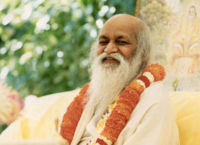 |
|
Brief Biography:
Maharishi Mahesh Yogi (birth name: Mahesh Prasad Varma) was born
tentatively on January 12, 1918 in Pounalulla, in a Central Province
of British India and died on February 5, 2008 in Vlodrop,
Netherlands. He founded and developed the Transcendental Meditation
technique and related programs and initiatives, including schools
and a university with campuses in the United States and China.
Around 1939, Maharishi Mahesh Yogi became a disciple of Swami
Brahmananda Saraswati who, from 1941 to 1953, was the Shankaracharya
(spiritual leader) of Jyotir Math, located in the Indian Himalayas.
Transcendental
means to go beyond;
Meditation
means thinking.
Transcendental
Meditation (TM)
simply means to go beyond thinking.
To go beyond thinking is the same as non-thinking. Or, its innermost
meaning is to go to the source of thoughts generation. Thoughts have
energy because they flow. Thoughts have intelligence because they
can choose the direction of the flow. The source of thoughts is
therefore an infinite field of energy and intelligence. By
practicing the TM, one can reach that source of thoughts, and can
attain the state of transcendental consciousness, where the
peacefulness, blissfulness
or ecstasy of
expanded awareness
can be experienced.
Transcendental Meditation (TM)
is a simple meditation technique that was introduced to the United
States and Western World in the 1960s by Maharishi Mahesh Yogi.
It involves sitting comfortably and saying a mantra (word or phrase
such as RAM) over and over again for twenty minutes twice a day. The
goal is to drive out distracting thoughts and reach a heightened
level of awareness that produces a profound sense of deep rest.
TM is Practiced Twice a Day:
TM is practiced for 15 to 20 minutes once in the morning on an empty
stomach before breakfast to start the day with alertness and energy,
and once again in the late afternoon just before dinner on an empty
stomach to eliminate the accumulated stress of the day and as a
basis for an enjoyable evening and a good night’s sleep.
How to Do TM
(Transcendental Meditation)
When doing TM, you can sit cross-legged traditionally on a rug,
carpet or
pillow in
yogi-style position.
This does not mean that these are
your only options, as you could always sit comfortably on the couch,
a
recliner or even
office guest chairs if you wish.
You can meditate in any environment (outdoor or indoor) as long as
it is safe. You can meditate outdoors
when the light is not too bright and the place is quiet; you can
meditate indoors, even in your apartment, as long as the place is
quiet or noise level is low. You can practice TM anywhere in your
office after work, while riding the subway on a comfortable seat,
while traveling in an air plane by sitting on a comfortable seat, or
even in your car parked at a highway rest stop. However the best
place to practice it is in the comfort of your own home with peace
of mind.
Make sure you are not interrupted for 20 minutes while you are on
meditation. Take the phone off the hook and send the kids out to
play with instruction not to disturb for the next half an hour. TM
prescribes that you meditate for 20 minutes each session twice a
day. Since meditation takes you away from time keeping frame of
mind, you should have a watch or clock arranged nearby in such a way
that you can easily see it without having to change your sitting
position. Then approximately by the end of 20 minutes, you can open
your eyes slightly to check the time. Don’t be surprised if you
guess it’s only 4 or 5 minutes and then open your eyes to discover
that it’s been 15 minutes. Meditation works that way as your mind
shuts down from being alert. With practice you will develop a pretty
good sense of when to come out of your meditation session (20
minutes), and the watch or clock won’t be even necessary any longer.
TM Meditation Mantra:
Now for the mantra, the word RAM, one of the Hindu names of God, is
used. The person who meditates is supposed to say silently within
the heart the mantra RAM or RAMA. It is pronounced to rhyme
with “bomb” RAM or RAMA.
The people of Hare Krishna Organization use RAMA for chanting the
song:
“HARE KRISHNA, HARE RAMA; RAMA RAMA, HARE HARE.”
RAM was the last word uttered by Mahatma Gandhi when he was assassinated
with a gunshot.
Mahatma Gandhi Used to Chant His Favorite Hymn
Everyday:
|
Original
Raghupati Raghav Raja Ram
Patit Pavan Sita Ram
Sita Ram Jai Sita Ram
Bhaj Pyare Tu Sitaram
Ishwar Allah Tere Naam
Sabko Sanmati de Bhagavan
|
Translation
Lord Ram, the Lord of Heavens
Blessed is Thy Name
Victory to You Lord Ram, the Husband of Sita
Oh So Lovable, Joyous it is to Worship Thee...
Some of Us Call You Ishwar (Lord Vishnu)
and Some Others Call You as Allah
but We Beg You Lord that Do Bless Us All...
|
But since the word “RAM” is essentially unknown to western culture, it
will serve as a non-meaningful sound for our simulated TM
meditation. TM can be practiced even without having any belief in
mantra RAM, and still get successful results.
To begin TM, settle yourself comfortably into the meditating position
that suits you. Sit quietly with your eyes open for a few moments
without any thoughts and then close your eyes. For perhaps a minute
just sit quietly without attempting to say the mantra. Most people
normally breathe at a rate of about 16 breaths per minute so use
your breathing as a guide for timing yourself. Just sit there and
count 16 breaths while just your mind and nervous system cool down.
Then silently say to yourself within your heart “RAM” by closing your
eyes. You can say it at whatever speed you want, and you
probably will find that you experiment a bit. Try coordinating it
with your breathing, and say “RAM” as you breathe out. Just keep
saying “RAM” silently in your mind over and over again.
If your attention wanders away from saying your mantra, which it’s
almost certain to do unless you have truly extraordinarily mental
control, that’s okay. That’s part of the meditation process,
according to TM. But as soon as you become aware that you have
stopped saying your mantra, you should gently and effortlessly come
back to it. Start repeating, “RAM, RAM, RAM.”
During the time that your attention is off the mantra, all sorts of
interesting thoughts and feelings and images may come into your
mind. That’s okay too. Don’t try to stop them forcefully. Carefully
but casually observe them without becoming entangled in them or
attached to them. You may start watching a lurid sex story or an
adventuresome drama starring yourself, but when you become aware
that you are not saying the mantra, gently let those thoughts go and
begin to repeat the mantra again.
When you have decided to end your meditation, simply stop saying the
mantra and sit there quietly for about two minutes with eyes closed.
Let your physical senses gradually restore themselves. Then slowly
begin to open your eyes. Take the full 2 minutes to do so, counting
breathes if necessary to time it. This is still part of the TM
procedure, and it serves the vital purpose of avoiding shock to the
nervous system, which is now in a very quiet and sensitized
condition.
After the 2 minutes of “rising to the surface,” your eyes will be
falling open and you will be completely aware of your environment.
You may have moved your body, hands, or legs somewhat during your
meditation, it is perfectly okay to do so, but you will probably now
find yourself in a position that you have been holding in a relaxed
way for 5 to 10 minutes, maybe longer.
Stretch your arms, rub your face and eyes, and get yourself into
motion. You will feel like you are waking up after a good night’s
sleep, and maybe you will yawn or have a deep sign. But within a few
minutes you will probably feel super-awake and full of energy.
What Happens During TM Meditation:
During TM, the mind settles down to a silent yet fully awake state of
awareness¾pure
consciousness. At the same time the body gains a unique and profound
state of rest and relaxation.
Mind can reach two different states: “state of exited mind and state
of settled mind.” For example it is Friday 2 pm; It has been a busy
day and a long week. You are late for an appointment. You race to
your car only to realize that you have forgotten your keys, and then
you have to battle traffic and road construction before finally
making it to your appointment, only to discover that you have left
behind some important papers; Your mind is speeding and your heart
is pounding; This is the state of excited mind. Another example is
it is Sunday afternoon and you are heading home from a long weekend
vacation, rested and relaxed; You feel contented, relaxed, happy;
Your mind is alert, calm, clear; You begin to plan your next coming
week with many practical and positive ideas, willing to make them
work for you; This is the state of settled mind. Similarly the body
and mind could reach a greater excitation, medium excitation or low
excitation depending on your daily circumstances.
TM is used to attain mental stability no matter how excited your state
of mind is. With the aid of TM, mind settles down to a silent state
of awareness where the mind is calm, collected, yet fully expanded
and fully awake. This state of mind represents the simplest but pure
form of human awareness. It is pure consciousness. This original
settled state is completely natural. It has always been there. Only
it has been lost from the experiences of human activities, lost from
its use because of the noise, perturbance, stress and other factors.
However TM allows the mind to attain pure consciousness rapidly and
easily and effortlessly and more importantly TM practice is
pleasurable and enjoyable. Extensive scientific research findings
showed that, through TM, the body gains a state of profound rest and
relaxation that is far deeper than any other meditation technique.
They called it "deep rest."
Pure consciousness is the source of unlimited creativity and
intelligence of the mind. Research has shown that attaining pure
consciousness back to its natural state twice a day makes the mind
more alert, creative and intelligent enough to take wise decisions
by being productive in work and enjoy the life. Moreover, the deep
rest provided by TM eliminates the build-up of stress and tension.
Deep Rest Thru TM Is Better Than Sleep, Physical Activity and
Entertainment:
Pure consciousness can be accomplished by the deep rest thru TM
meditation. Rest eliminates the stress. The deeper the rest, the
better the elimination of stress is. The rest gained during a good
night’s sleep may eliminate some of the stress and fatigue that
comes from the daily activity. Sleep alone may not be enough to
attain full relaxation as we may not be completely free from fatigue
accumulated throughout the day. Some may exercise to help cope with
stress, play tennis, work out at gym, take an evening walk, or
listen to music, watch TV, go to a cinema, read a book, go fishing
or go on a trip to ocean. But all these physical and entertainment
activities may not remove the stress completely because stress
clings on to the nervous system and builds up day after day, week
after week, month after month and year after year. Too much worry
and personal problems add up and stress levels could be multiplied
to become a disaster. Therefore deep rest such as TM meditation,
twice a day, is essential to bring the consciousness to its pure
state. Deep rest eliminates deep stress.
Scientific findings showed that Transcendental Meditation (TM) is by
far the most effective meditation technique in reducing anxiety,
improving psychological health, increasing self-actualization, and
reducing drug, cigarette and alcohol-related addictions.
TM is a practical and proven technique for developing more energy,
creativity and intelligence¾for
awakening the unlimited potential of mind and body and for enjoying
greater health, happiness and success in life.
TM is Not a Religion, Not a Philosophy, Not a Lifestyle
[According
to Maharishi Mahesh Yogi]
TM is practiced by millions of people of all religions including
Clergy. TM supports all religions because it releases stress and
purifies the mind, body and emotions of the person who practices it.
However please note that some courts in US ruled that TM is a
religion.
TM is a simple mechanical technique. Turning on a light switch is a
technique, not a philosophy; using a lever to move a large rock is a
technique, not a philosophy; Similarly Transcendental Meditation is
a simple technique that is universally applicable, repeatable and
verifiable by anyone anywhere without any philosophical background.
TM is so easy that it can be easily learned and practiced by anyone
without ever changing the lifestyle. The benefits of TM are
rewarding and highly enjoyable.
Proof that TM Lowers High Blood Pressure
TM is a simple meditation technique that was introduced to the United
States in the 1960s by Maharishi Mahesh Yogi of India. It involves
sitting comfortably and saying a mantra (word or phrase such as RAM)
over and over again for twenty minutes twice a day. The goal is to
drive out distracting thoughts and reach a heightened level of
awareness that produces a profound sense of rest, which Dr. Benson
calls the "relaxation response."
The cardiovascular benefits of meditation are not limited to TM,
according to Dr. Benson, associate professor of medicine and
president of the Mind/Body Medical Institute at Deaconess Hospital.
Many other techniques that involve sitting quietly, repeating a word
or sound, and ignoring distracting thoughts can bring about the
relaxation response. Dr. Benson emphasized one note of caution:
"It's essential for people with hypertension who want to try TM or
any other relaxation technique to work with their doctor and not
change or stop taking medication on their own." Refer to American
Journal of Managed Care, April 1996, pp. 427-437. See Dr. Benson's
books below.
Benefits of TM
 Clearer Thinking, Improved Memory, Better Quality Sleep, Concentration
and Creativity
Clearer Thinking, Improved Memory, Better Quality Sleep, Concentration
and Creativity
Reduces Stress and Anxiety While Increasing Energy and Vitality
Improves Health, Lowers High Blood Pressure, and Promotes Reversal of
Aging
Improves Memory, Creativity and Intelligence
Enriches and Strengthens Personal Relationships
Expands the Mind to its Unlimited Cosmic Potential
Develops Inner Contentment, Happiness, and Fulfillment¾the
Sate of Enlightenment
Creates Waves of Peace and Harmony in Individual and Collective
Consciousness
Adverse Effects of TM
Some people, including a study at Stanford Research Institute,
reported harmful effects of TM such as mental disorders, depression,
increased negativity and less motivation in life. So it is strongly
recommended that you study the effects of TM carefully before
adopting it permanently and you should evaluate whether or not TM is
beneficial and suits your body and mind.
For more
information on TM, read the following books:
|
TM Books
from Amazon.com
Trancendental Meditation
All prices are subject
to change; Whatever price shows up on Amazon's site is final.
List prices are already discounted up to 45%
To buy
TM Books on ebay (Incredibly Cheap),
Click Here
|
|
 |
|
 |
|
1.
Science of Being and Art of Living: Transcendental Meditation
Author: Maharishi Mahesh Yogi
List Price:
$16.00
Price: $10.88 |
2.
Everything You
Want to Know About TM -Including How to Do It
Author: John White
List Price:
$14.95
Price: $14.95 |
3. The
Transcendental Meditation (TM)
Technique (Paperback)
Author: Peter Russell
List Price:
$16.95
Price: $11.53 |
|
 |
 |
 |
|
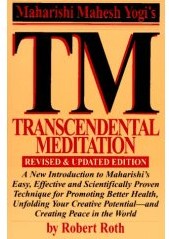
4. TM - Transcendental Meditation : A New
Introduction to Maharishi's Easy, Effective and Scientifically
Proven Technique for Promoting Better Health, Unfolding Your
Creative Potential, and Creating Peace in the World (Paperback)
Author: Robert Roth
Price: $8.95 |
5.
The Transcendental Meditation TM Book: How to Enjoy the Rest of Your
Life (Paperback)
Author: Denise Denniston
Price: $1.99
|
6.
His Holiness Maharishi Mahesh Yogi's Translation of the
Bhagavad-Gita, Chapters 1-6, in the light of Maharishi's
Transcendental Meditation: Scientific Research Results (Paperback)
Author: Maharishi Mahesh Yogi
List Price:
$30.00
Price: $30.00 |
|
 |
 |
 |
|
7.
The Miracle Power of Transcendental Meditation
(Paperback)
Author: Norvell
Price: $5.61
|
8.
The Maharishi Effect: A Personal Journey
Through the Movement That Transformed American Spirituality
Author: Geoff
Gilpin
Price: $2.15 |
9.
Transcendental Meditation in Criminal
Rehabilitation and Crime Prevention
Authors: Kenneth G Walton, David
Orme-Johnson, Rachel S Goodman
List Price:
$90.00
Price: $90.00 |
|
 |
 |
 |
|
10.
The Relaxation Response (Lower Blood Pressure with TM)
Authors:
Herbert Benson, MD and Miriam Z. Klipper
List Price:
$7.99
Price: $7.99
|
11. Timeless Healing (Paperback)
Authors: Herbert Benson, MD and Marg Stark
List Price:
$15.00
Price: $11.70
|
12.
Wellness Book: The Comprehensive Guide to Maintaining Health and
Treating Stress-Related Illness
Authors: Herbert Benson, MD and Eileen M., R.N. Stuart
List Price:
$17.00
Price: $11.87 |
| |
|
|
| |
Go to the Top |
|
| |
|
|
| |
|
|
| |
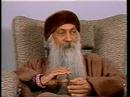
Bhagwan
Osho
(1931-1990)
Bhagavan Shree Rajaneesh |
|
| |
 |
|
Osho Book of Secrets
Best Love Quotes
|
|
God is not a person somewhere sitting and waiting for you;
God is a revelation in this world. When the mind is silent,
clear, unburdened, young, fresh and virgin—with
a virgin mind—
you will realize that God is everywhere!
God is Omnipresent!
|
|
Find the Light and
It Will Show You the Path.
The Path That is Shown by Your Own Light is the Only Path that
is Right.
|
Each person
comes into this world with a specific destiny!
He/She has something to fulfill, some message has to be
delivered,
and some work has to be completed, and so on.
You are not here accidentally, my dear, you are here
meaningfully!
There is a purpose behind you, Yes
There Is!
The Whole intends to do something through you and your actions.
|
Osho
(real name:
Bhagavan Shree Rajaneesh)
was an Indian sage, born in a small village Kuchwada, Narsinghpur
District, Madhya Pradesh State, India on December 11, 1931.
Enlightenment Experience of Osho:
Osho alleged in his biography that he became spiritually enlightened
on 21 March 1953, when he was 21 years old. He claimed to have
dropped all effort and hope. After what he describes as an intense
seven-day process he went out at night to a garden in Jabalpur,
India, where he sat under a tree.
Osho revealed: The moment I entered the garden everything became
luminous, it was all over the place¾
the benediction, the blessedness. I could see the trees for the first
time¾their
green, their life, their very sap running. The whole garden was
asleep, the trees were asleep. But I could see the whole garden
alive, even the small grass leaves were so beautiful. I looked
around. One tree was tremendously luminous¾the
maulshree tree. It attracted me, it pulled me towards itself. I had
not chosen it, God himself has chosen it. I went to the tree, I sat
under the tree. As I sat there things started settling. The whole
universe became a benediction.
It is difficult to say how long I was in that state. When I went back
home it was four o'clock in the morning, so I must have been there
by clock time at least three hours, but it was infinity. It had
nothing to do with clock time. It was timeless. Those three hours
became the whole eternity, endless eternity. There was no time,
there was no passage of time; it was the virgin reality¾uncorrupted,
untouchable, immeasurable. And that day something happened that has
continued, not as a continuity, but it has still continued as an
undercurrent. Not as a permanency¾each
moment it has been happening again and again. It has been a miracle
each moment.
And since that
night I have never been in the body. I am hovering around it. I
became tremendously powerful and at the same time very fragile. I
became very strong, but that strength is not the strength of a
Muhammad Ali. That strength is not the strength of a rock; that
strength is the strength of a rose flower¾so
fragile in his strength, so sensitive, and so delicate.
Osho Dynamic Meditation & Osho Kundalini Meditation
Osho
developed and promoted many meditation techniques, among which
"osho dynamic meditation and osho kundalini meditation" became the most
popular meditation techniques throughout the western world.
Osho's revolutionary point of view on meditation is that the sitting
meditation simply is not necessarily the most effective means of
clearing the mind and attaining the mindfulness. Osho discovered
that an active meditation by engaging with an intense physical and
emotional activities can help reach a non-thought state but at the
same time alert and fully aware and conscious of the moment. Only in
this way, by introducing physical and emotional activities into the
meditation process, can the
practitioner attain mindfulness
and will not become lost or distracted by inner thoughts of wandering
mind.
Osho introduced the vigorous shaking, laughing, jumping, crying,
speaking loud a mantra, intense breathing, and even smoking and
sexual activity as meditative exercises that can lead the meditation
practitioner to inner freedom without any perturbance.
Osho stated that this kind of meditation practice brings our
physical and mental energies to a peak level, so that the following
silence is smooth and easy¾leaving
us alert, refreshed, and newly energized throughout the day.
Osho
Active Meditation: a. Osho Dynamic Meditation
b. Osho Kundalini Meditation
Osho Dynamic
Meditation
60 Minutes of Daily Activity for 21 Days:
10
Minutes Breathing + 10 Minutes Expression + 10 Minutes Action + 15
Minutes stillness + 15 Minutes Dance
In Osho Dynamic
Meditation, you have to be continuously alert in a standing
position, conscious, and aware. You should remain a witness of
everything happening to you throughout the meditation.
Osho Dynamic Meditation lasts for one hour long and is performed in
five stages. It can be done alone, and can be even more powerful
when it is done with others. When doing this meditation with others,
the meditation remains an individual experience, so you should
remain oblivious (unaware) of others around you and keep your eyes
closed throughout, preferably using a blindfold. A blindfold will be
helpful to keep your attention focused inward. It is best to have an
empty stomach and wear loose, comfortable clothing. As with all
meditations, make sure you are in a situation where you will not be
disturbed or interrupted. To see significant results, you should do
it 21 days continuously.
First stage: 10 minutes
of Intense Breathing
Breathe
rapidly in and out through the nose for 10 minutes, let your
breathing be intense and chaotic. Allow the breath to move deeply
into the lungs, and don’t follow any set pattern or rhythm, and let
it go disorganized. Allow your body movements as disorderly as
possible and do not follow any set pattern. Use these natural body
movements to help you build up your energy. Feel energized, and keep
all the energy within you.
Second stage: 10
minutes of Expression
After 10
minutes of intense breathing, explode to a much higher level of
energy! Let go of everything that needs to be thrown out. Go totally
mad, scream, shout, cry, jump, shake, dance, sing, laugh, throw
yourself around. Through this frenzy activity, through out all
madness and frustration that has been within you. Hold nothing back,
keep your whole body moving without any premeditated course of
action. Don't allow your mind notice what is happening. Keep going
like that for 10 minutes.
Third stage: 10 minutes of Mantra Action
Raise your arms, jump up and down shouting the mantra HOO! HOO!
HOO! as deeply as possible and as loudly as you can. Each time you
land, on the flats of your feet, let the sound hammer deep into the
sex center. Give all you have, exhaust yourself totally.
Fourth stage: 15
minutes of Stillness
STOP
jumping! Freeze where you are in whatever position you find
yourself. Don't arrange the body in any pre-determined posture. A
cough, a movement, anything will dissipate the energy flow and the
effort will be lost. Be a witness to everything that is happening to
you.
Fifth stage: 15 minutes
of Celebration
Celebrate it
with happiness! You have just thrown away all your madness and
frustrations into the vacuum that is vastly available in the space.
Sing and dance for what you have just accomplished, be appreciative
of yourself, and be proud of yourself. Carry these positive feelings
throughout the day wherever you go and whatever you do. Be mindful
of your true self as your consciousness will reach its pure natural
state in 21 consecutive days.
Osho Kundalini Meditation
60 Minutes of Daily Activity for 21 Days:
15
Relaxing & Shaking + 15 Dance + 15 Minutes Sitting & Standing + 15
Minutes Stillness
Osho Kundalini meditation is a more relaxed form of Active meditation
compared to dynamic meditation. Osho Dynamic Meditation lasts for one hour long and is performed
in four stages.
This meditation is ideal for rejuvinating and energizing one’s self.
First Stage: 15 minutes of Relaxing and Shaking the Body
In a standing position, shake the body
for 15 minutes as vigorously as you can allowing your whole body
remain loose without any direct muscle control.
Second Stage: 15 minutes of Dance
Dance spontaneously for another 15
minutes in a relaxed manner, expressing yourself wherever your mood
takes you.
Third Stage: 15 minutes of Sitting and Standing
Exercise yourself for 15 minutes by sitting and standing yet
allowing your whole body be entirely still, and observing and
becoming a witness of both inner and outer sensations as they occur.
Fourth Stage: 15 minutes of Stillness
Lay down as if you were suddenly collapsed for another 15 minutes,
with your arms balanced at either side of your body and relax
entirely, just forgetting all your problems, and making no effort to
do anything.
For additional information read the books of Osho listed below.
Osho Talks & Osho Discourse
|
Osho emphasizes that you
must clean up and purify your mind everyday through dynamic
meditation or kundalini meditation exactly as you clean up your
physical body everyday by taking a bath. Meditation is a
bath for the mind to clean up the madnesses/frustrations such as
envy, jealousy, hate, greed, anger, sadness, stress, anxiety and
many other negative human characteristics. Humans have learned
how to clean up the body on a daily basis but lacked the natural
meditative skills of cleaning the mind. Osho says that one must
simply throw away all madnesses/frustrations into the vacuum
that is vastly available in the space on a daily basis doing
some kind of meditation. Osho also warns not to throw away those
madnesses/frustrations upon your neighbor or enemy, and if you
do so it would constitute the violence and backfire. If you
understand and develop this art, and practice the dynamic
meditation with proper discipline and responsibility, all
madnesses/frustrations of your mind will be dissolved as the
space absorbs them once and for all. Once your mind is cleaned
up like that on a daily basis through dynamic meditation
technique, your mind gets purified, and if you are consistent
and persistent in your efforts, one day you will attain
mindfulness and recover your pure consciousness in its natural
state. As a result, your karma will then be abolished, and you
will be liberated from all sorts of suffering. Human suffering
occurs due to the buildup of karma when the energy dissipates
away from the consciousness due to negative habits and when
consciousness gets contaminated. Dynamic meditation will help
you achieve this goal of recovering pure consciousness in its
natural state.
|
Osho Book of Secrets
Best Love Quote
|
|
God is not a person somewhere sitting and waiting for you;
God is a revelation in this world. When the mind is silent,
clear, unburdened,
young, fresh
and virgin—with
a virgin mind—
you will realize that God is everywhere!
God is Omnipresent!
|
|
Testimonials
"Osho is an enlightened master who is working
with all possibilities to help humanity overcome a difficult phase
in developing consciousness."
-- Dalai Lama
"Osho's brilliant insights will benefit
all those who yearn for experiential knowledge of the field of pure
potentiality inherent in every human being." -- Dr Deepak Chopra
|
|
Books of Osho
from Amazon.com
All prices are subject
to change; Whatever price shows up on Amazon's site is final.
List prices are already discounted up to 45%
To buy
Books on ebay (Incredibly Cheap),
Click Here
|
|
 |
 |
 |
|
1.
Osho Meditations:
The First and Last Freedom (Paperback)
Author: Osho
List Price:
$13.95
Price: $11.16 |
2.
Osho Book of Secrets: Keys to Love and Meditation (Hardcover)
Author: Osho
List Price:
$35.00
Price: $23.10 |
3.
Osho Awareness: The Key to Living in Balance (Insights for a New
Way of Living)
Author: Osho
List Price:
$12.95
Price: $10.36 |
|
 |
 |
 |
|
4. Intuition: Knowing Beyond Logic (Paperback)
Author: Osho
List Price:
$12.95
Price: $10.36 |
5. Creativity: Unleashing the Forces Within
(Insights for a New Way of Living.) (Paperback) Author:
Osho
List Price:
$12.95
Price: $12.95 |
6.
Joy: The Happiness That Comes from Within (Osho, Insights for a New
Way of Living.) (Paperback) Author: Osho
List Price:
$12.95
Price: $10.36 |
| |
|
|
| |
Go to the Top |
|
|
|
|
 |
|
 |
|
1.
Meditation for Beginners (Hardcover)
Author: Jack Kornfield
Price: $23.95 |
2.
Meditation For Dummies (Book and CD edition)
Author: Stephan Bodian
List Price:
$24.99
Price: $16.49 |
3.
8-Minute Meditation:
Quiet Your Mind, Change Your Life.
Author: Victor Davich
List Price:
$12.95
Price: $10.36 |
|
 |
 |
 |
|
4.
Meditations on First Philosophy:
Authors: Rene Descartes, Donald A. Cress
List Price:
$5.95
Price: $5.95 |
5.
Meditations
(Penguin Classics)
Authors: Marcus Aurelius and Martin Hammond
List Price:
$10.00
Price: $8.00 |
6.
Meditations on First Philosophy (Paperback)
Author: Rene Descartes
List Price:
$9.99
Price: $9.99 |
|
 |
 |
|
|
7. The Best Guide to Meditation
Author: Victor N. Davich
List Price:
$17.95
Price: $12.21 |
8. Self-Meditation (Paperback)
Author: Barbara Ann Kipfer
List Price:
$8.95
Price: $8.95 |
9. The Meditation Bible:
The Definitive Guide to Meditations
Author: Madonna Gauding
List Price:
$14.95
Price: $10.17 |
|
 |
|
 |
|
10.
Metaphysical Meditations
Author: Paramahansa Yogananda
List Price:
$20.95
Price: $14.25 |
11. A Practical Guide to Buddhist Meditation
(Hardcover)
Author: Swami Paramananda
Price: $0.01 |
12. The New Meditation Handbook: Meditations to Make Our Life Happy
Author: Kelsang Gyatso
List Price:
$12.95
Price: $10.36 |
|
 |
 |
 |
|
13. This
Light in Oneself: True Meditation (Paperback)
Author: Jiddu Krishnamurti
List Price:
$12.00
Price: $9.60 |
14. Daily Meditations with Krishnamurti:The Book
of Life
Author: Jiddu Krishnamurti
List Price:
$16.00
Price: $10.88 |
15. Insight
Meditation:
A Step-By-Step Course on How to Meditate
Authors:Sharon
Salzberg& J. Goldstein
List Price:
$29.95
Price: $19.77 |
|
 |
 |
 |
|
16. Insight
Meditation: The Practice of Freedom (Paperback)
Author: Joseph Goldstein
List Price:
$14.95
Price: $10.17 |
17.
The Heart of Buddhist Meditation: Satipatthna
Authors: Nyanaponika and Nyanaponika A. Thera
List Price:
$12.95
Price: $10.36 |
18.
True Meditation: Discover the Freedom of Pure Awareness (Hardcover)
Author: Adyashanti
List Price:
$19.95
Price: $13.57 |
|
 |
 |
 |
|
19.
Thoughts and Meditations (Paperback)
Author: Kahlil Gibran
List Price:
$22.50
Price: $22.50 |
20. Stages of Meditation (Paperback)
Author: The Dalai Lama
List Price:
$16.95
Price: $12.71 |
21.
Kundalini Yoga Meditation: Techniques Specific for Psychiatric
Disorders
Author: David S.
Shannahoff-Khalsa
List Price:
$37.50
Price: $24.90 |
|
 |
 |
 |
|
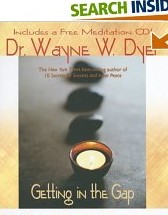
22. Getting
in the Gap: Making Conscious Contact with God
Through Meditation (Book with CD)
Author: Wayne W. Dyer
List Price:
$17.95
Price: $12.21 |
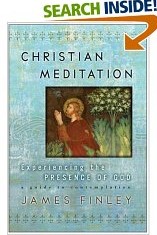
23. Christian Meditation: Experiencing the
Presence of God (Paperback)
Author: James Finley
List Price:
$13.95
Price: $11.16 |
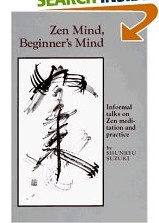
24.
Zen Mind, Beginner's Mind (Paperback)
Author: Shunryu Suzuki
List Price:
$12.95
Price: $10.36 |
|
 |
 |
 |
|
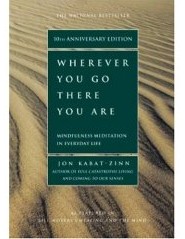
25. Mindfulness Meditation in Everyday Life
(Wherever You Go, There You Are!)
Author: Jon Kabat-zinn
List Price:
$14.95
Price: $10.17 |
26.
The
Miracle of Mindfulness (Paperback)
Author: Thich Nhat Hanh
List Price:
$14.00
Price: $10.20 |
27.
The Power of Now: A Guide to Spiritual Enlightenment (Paperback)
Author: Eckhart Tolle
List Price:
$14.95
Price: $10.17 |
|
 |
 |
 |
|
28.
THE MOST DIRECT AND RAPID MEANS TO
ETERNAL BLISS
Author: Michael Langford
List Price:
$15.95
Price: $15.95 |
29.
Meditations, and Exercises from The Power of Now
Author: Eckhart Tolle
List Price:
$16.00
Price: $10.88 |
30. Daily Meditations
For Gay, Lesbian, Bisexual,
And Transgender People
Author: Joan Larkin
List Price:
$13.95
Price: $11.86 |
|
 |
 |
 |
|
31. Yoga: The Spirit and Practice of Moving into Stillness (Paperback)
Author: Erich Schiffmann
List Price:
$16.95
Price: $11.53 |
32. Yoga Nidra Meditation CD:
Extreme Relaxation of Conscious Deep Sleep
Author: Swami
Jnaneshvara Bharati
List Price:
$19.99
Price: $13.59 |
33. Light on Yoga: The Bible of
Modern Yoga Authors: B. K. S. Iyengar and Yehudi Menuhin
List Price:
$18.00
Price: $12.24 |
|
|
Go to the Top |
|
|
|
|
|
|
|
Silva UltraMind
Silva
Mind Control Method, Extrasensory Perception ESP, Holistic Healer
eBooks
| Books | CDs | DVDs | Downloads
Jose Silva |
|
|
|
Jose Silva's Biography
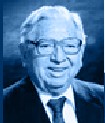
Jose Silva
was born on August 11, 1914 in
Laredo, Texas, USA.
He and
his older sister and younger brother were raised by their
grandmother. Silva supported the family from a very young age by
selling newspapers, shining shoes, and doing odd jobs. He never
attended school, but learned to read and write by watching his
sister and brother do their homework.
Jose Silva first learned hypnosis and
later abandoned.
At the age of fifteen, Silva began to repair radios and built a
successful business. This experience helped him recognize different
brain wave frequencies. As a teenager, one day he accidentally reached the
alpha-state of mind.
Silva’s first reported experience with ESP
(Extrasensory Perception) occurred one evening in 1953 while his
daughter was in her “alpha level.” Silva was questioning his
daughter about her school work, and as she answered each question,
he framed the next in his mind, before verbally asking the question.
Silva reported that his daughter began to give the answers to the
questions he was forming in his mind before he verbalized them.
Since then, Jose
Silva began
experimenting with mental training exercises to quiet the brain yet
keep it more independently alert than in hypnosis. This, he
reasoned, would lead to improved memory combined with understanding
and hence to higher I.Q. scores.
The exercises from which Mind Control evolved called for relaxed
concentration and vivid mental visualization and ways of reaching
lower levels. Once reached, these levels proved more effective than
in Beta level in learning. The proof was in his children's sharply improved
grades over a three-year period while he continued to improve his
techniques. Jose Silva was
known to be the
first person to prove that we can learn to function with awareness
at the Alpha and Theta frequencies of the brain.
Jose
Silva died peacefully due to natural causes on February 7, 1999 at the
age of 84. The Silva UltraMind ESP System was his final creation,
completed shortly before he died, intended to help people increase
their I.Q. and develop psychic abilities.
Jose
Silva’s Discovery:
The life on higher or spiritual dimension where we came from, and
where we go after we die, can be understood. When we communicate
with the higher intelligence in the spiritual dimension, we can
obtain all the guidance and help that we need to carry out our
mission in life here on earth, and can be healed and heal others.
According to Jose Silva, it is possible to communicate with the
Higher Intelligence on the Other Side if we are capable to use delta
brain wave frequencies associated with deep sleep.
|
|
|
|
Silva
Life Systems, Silva Meditation
Books from Amazon.com
All
prices are subject to change; Whatever price shows up on Amazon's
site is final.
List
prices are already discounted up to 45%
|
Some Selected Books on
Amazon.com
Silva UltraMind
|
|
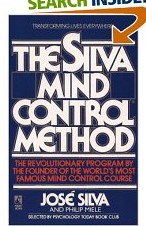
1.
The Silva Mind Control Method
(Mass Market Paperback)
Author: Jose Silva
List Price:
$7.99
Price: $7.99 |
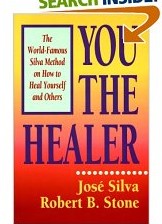
2.
You the Healer (Holistic Healer): The World-Famous Silva Mind Method on How to Heal Yourself
and Others (Paperback)
Author: Silva & Stone
List Price:
$14.95
Price: $10.17
|

3.
Jose Silva's Everyday ESP (Extra
Sensory Perception ESP):
Use
Your Mental Powers to Succeed in Every Aspect of Your Life
Authors: Jose Silva and Ed Jr Bernd
List Price:
$18.99
Price: $13.14
|
|
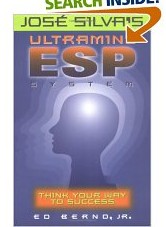
4.
Jose Silva's
Ultramind ESP System:
Think Your Way to Success (Paperback)
Author: Ed Jr Bernd
List Price: $27.75
|
5.
The Silva Method: Think and Grow Fit (Paperback)
Authors: Jose Silva and Ed Jr Bernd
Price: $70.00 |
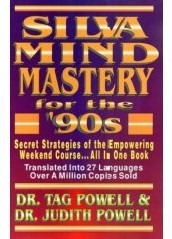
6.
Silva Mind Mastery for the '90s (Paperback)
Authors: Tag Powell and Judith Powell
Used Price: $7.35
|
|
Click Here and Scroll Down to View
Silva UltraMind CDs & DVDs. |
|
|
|
|
|
|
Go to the Top |
|
|
|
|
 |
|
|
|
|
|
|
If Liked and Enjoyed This
Page, Please Make a Donation to Prime Publishing Co. |
|
Click Below To Donate:
You
Can Donate With Your Paypal Account, Debit Card, or Credit Card! |
|
 |
|
|
|
|
|
ACKNOWLEDGEMENTS
We
thank Dr. RK for contributing his time and effort
in preparing the aforementioned reviews.
Prime
Publishing Co.
|
|
|
|
|



.gif)











 Enhance your thinking,
memory, creativity, and foresee the future.
Enhance your thinking,
memory, creativity, and foresee the future. .jpg)

